top of page
Web-Vet TM Neurology Specialists

Blog
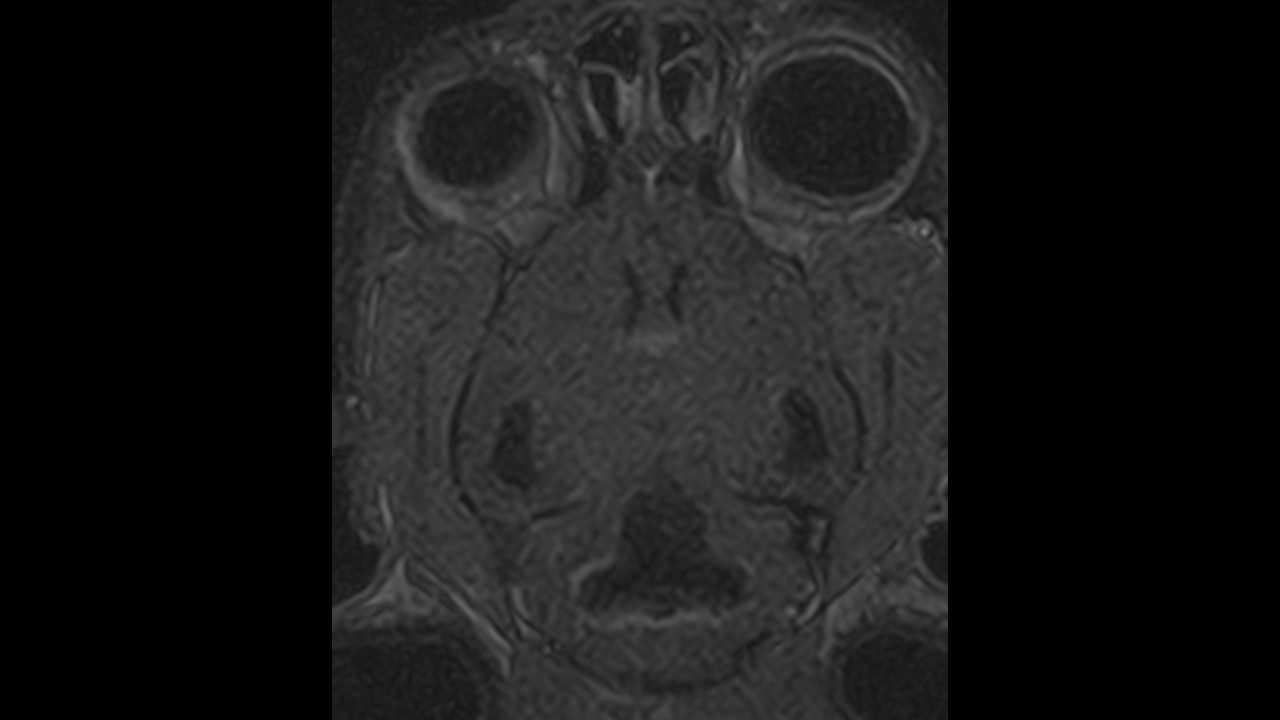
MRI of cats with suspected epileptic seizures
In this Journal Club webinar sponsored by Hallmarq Veterinary Imaging, Dr Anna Knebel discusses her recent publication on MRI assessment of cats with suspected seizure activity.

Generalised Absence Seizures in Cavalier King Charles Spaniel Dogs
Dr. Rochelle Paterson joins us in this webinar to discuss her study on Cavalier King Charles Spaniel dogs with generalized absence seizures. Absence seizures are classified as a type of generalized onset non-motor seizure with clinical symptoms, including unresponsiveness and staring spells. Absence seizures in people are generally seen in children aged 5 to 15 years and occur in multiple genetic generalized epilepsies, including childhood absence epilepsy (CAE), juvenile abs

How to Select the Best Imaging Test for Spinal Disease in Dogs and Cats
This lecture discusses the value of the different diagnostic imaging tests available to determining treatment options and prognosis in dogs and cats with spinal disease, as well as the value of these tests to clients relative to the cost. The goal of this session is to help in the consideration of value judgments in strategically planning diagnostic imaging for patients presenting with clinical signs related to their spine.

A systematic approach to the imaging of brain tumors in dogs and cats
Dr. Philippa Johnson, a board-certified veterinary imager, reviews a logical and thorough approach to the interpretation of suspected brain tumors in dogs and cats. Starting with using specific imaging criteria to prioritize differential diagnoses, Dr. Johnson also talks about how to differentiate between neoplasms, abscesses, and hematoma and how to correlate the location and imaging features of a mass to the clinical presentation of the affected patient.

Non-Infectious Meningo-encephalitis of Dogs - An Imaging Review
In this webinar, Dr. Laurent Garosi explores meningoencephalomyelitis, focusing on non-infectious causes (NIME), which are more common in dogs, versus infectious etiologies frequently seen in cats. He discusses various NIME subtypes, including SRMA, GME, NME, NLE, which are practically termed meningoencephalomyelitis of unknown origin (MUO). Attendees will learn how understanding underlying disease mechanisms and histopathology can enhance the interpretation of MRI findings i


Interpreting Canine MRI Scans: A Veterinary Guide
Magnetic Resonance Imaging (MRI) has become an essential diagnostic tool in veterinary neurology. It provides detailed images of soft tissues, including the brain, spinal cord, and surrounding structures. Understanding how to interpret canine MRI scans is crucial for accurate diagnosis and treatment planning. This guide offers practical insights into reading these scans effectively. Understanding the Basics of Canine MRI Scans MRI uses magnetic fields and radio waves to creat

Seizure Emergencies
In the first of four spring 2026 webinars sponsored by Hallmarq Veterinary Imaging, Dr. Marios Charalambous provides an overview of the pathophysiology, investigation and treatment of emergency seizure presentations with a focus and status epilepticus and cluster seizures in dogs and cats.

Paroxysmal Dyskinesia in Cats
In this webinar, Dr Fanis Liatis discusses the results of his recently published study on paroxysmal dyskinesia in cats. This is the first study to describe idiopathic paroxysmal dyskinesia in a diverse population of cats, providing additional information about this disease in multiple cat breeds other than the previously described Sphynx. This study also describes a few cases of cats with presumptive gluten-sensitive paroxysmal dyskinesia. Tune in for some great descriptive

CSF markers and MRI lesion volume as relapse predictors for dogs with MUO
In this live webinar, Drs. Spohn and Nessler explore their recent paper on utilizing CSF and MRI to predict the likelihood of relapse in dogs with meningoencephalitis of unknown origin (MUO). Repeated MRI exams are advantageous for monitoring dogs with MUO. A recent study suggested a follow-up MRI three months post-diagnosis, along with CSF analysis, to evaluate treatment success. Nonetheless, image interpretation remains subjective. To tackle this, recent research has inves

Imaging of Canine Sports and Work-Related Injuries in Dogs
In this lecture, Dr Bryan Torres from the University of Georgia will explore how advanced imaging techniques are transforming the diagnosis and management of sports-related injuries in canine athletes and work-related injuries in working dogs. Dr Torres details how imaging techniques can elevate the assessment and treatment of common musculoskeletal injuries in performance and working dogs.
bottom of page